
Notes from a Heatwave
Daily life under the heat dome

NOTE: For readers in London and Edinburgh, I’m holding (free) readings of my new play Wolf Play in July and August. Details as follows:
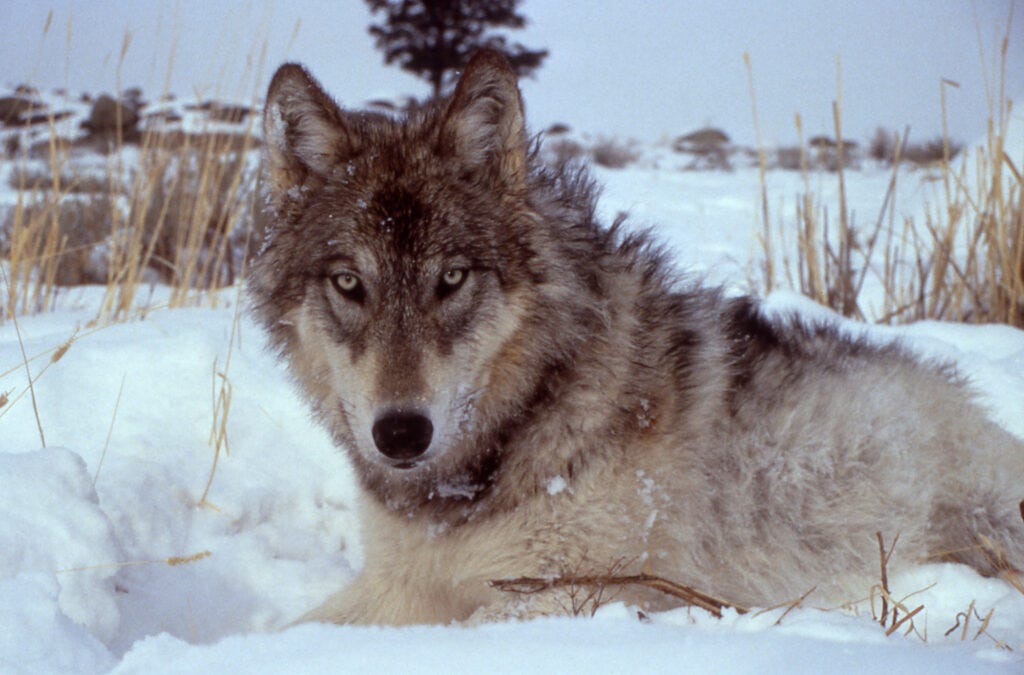
Wolf Play
In 1995, a pack of wolves was released in Yellowstone National Park for the first time in 70 years. A year later, a second pack followed. Rather than spreading out throughout the park, the two packs went to war with each other - sparking 18 years of clan warfare, as three generations of wolves fought for control of a single valley.In Wolf Play, this extraordinary true story becomes a modern day Shakespearian epic. Sibling rivalry, ill-fated love affairs and dynastical struggle unfold in a real life saga of sex, power and family.
London
6.30-8.00pm Tuesday 21 July
Shoreditch Town Hall
https://shoreditchtownhall.com/whats-on/david-finnigan-wolf-playEdinburgh
11.50am - 1.00pm Tuesday 25 August
Jack Dome, Pleasance
https://www.pleasance.co.uk/event/wolf-play-reading
Alright, on to the newsletter:
— — — — — — — — — — — — — — — — — — — —
The first thing you notice is that no-one’s sleeping. London’s usually full of crackling energy, an excitement which sometimes verges on too intense, but this week it feels like people are in a daze.
The first few days are slow and somnolent. By the second week things start to feel tense. Angry shouts from the nearby flats in the hot evenings. Hungover men spin in circles on the train platforms in the early morning, hissing and spitting.
—
Of course none of the architecture is designed for this. The infrastructure in the UK was designed to trap as much heat as possible, for a Victorian world of freezing toes and hands warmed by coal fires.
Now every building is stifling, the air doesn’t move, the temperature rises as you climb the stairs, baking hot bedrooms with tiny windows.
You think, in Australia this weather would be perfectly manageable - is perfectly manageable - with houses and offices designed for airflow and cooling. Singapore is already this exact temperature, year round, but in Singapore the streets are lined with trees, there are cool spaces, air conditioning, the city breathes.
London is stumbling into becoming a tropical city, but without any foresight or preparation. A crumbling south-east Asian metropolis, but without the air conditioning.
—
Friends are previewing an outdoor theatre show in a London park. The Saturday matinee is cancelled. Multiple cast members get heatstroke.
They pare the show back, remove heavy costume items and wigs. The actors perform with ice packs under their clothes.
—
The first thing you did when you settled here was to install air conditioning. Lessons from Manila: you can handle the heat, as long as you can sleep. You can survive a lot as long as you can cool down at night.
—
One night a wild storm breaks over the city. 3am, woken from sleep. Lightning flashing right over the roof, over and over, minute after minute, thunder shaking the windows. In brief moments between crashes, you hear the frightened yip of the fox cubs in the neighbours’ garden.
After the lightning subsides, a minute or two of spattering rain, and then no more. The temperature doesn’t change.
—
Friends with small children start sounding frantic. Babies not sleeping, covered in damp towels, fans blowing, awake all night, tossing and crying.
—
You do a couple of events at London Climate Action Week, at Somerset House. It’s so hot it’s hard to breathe. The audience crowd around the air conditioning units. We’re gathered to talk about climate futures on the hottest June day in British history.
Everyone is aware of the irony, but no-one talks about it. What can you say? What is there to add?
You work on climate, that’s the job - but you live, day to day, in weather. You can focus on climate change, the great shifting forces of planetary transformation - but when it comes to weather, all you can do is prepare for the extremes and then live through it, day by day, as best you can.
—
The science of heat domes. The weakening and enstranging of the jet stream. The formation of horseshoe-shaped pockets of stagnant air as the rivers in the sky deform and stray. The high-altitude, high-pressure zones that press down on the air from above and prevent hot air from escaping.
‘Heat dome’ - it feels like it sounds. You really do have the sense of being trapped under a dome, a tent of high-pressure air that locks the heat in, cycling heat from the sky to the ground over and over, getting hotter and hotter with the friction.
There’s a heat you’re familiar with from Australian summer, the heat of a scorching sun bearing down on you through a too-thin atmosphere. The feeling of being burned by a ball of fire millions of miles away.
This is different. This is stagnant and claustrophic, the air recycled and stale.
—
You remember the SunSmart education you were given in school. Repeated lessons on sunscreen, skin cancer, on staying safe in the heat. The basic understanding of how to manage in hot weather that every Australian grows up with.
In the UK, ‘sun protection’ is an alien concept. The Londoners rush out into the sun the first chance they get. The men strip off their shirts, the women wear strappy tops, they sit outside the pub across the road in direct sunlight, drinking beer, sweating and panting until they’re sunburned and nauseous and throwing up in the bathroom.
—
Whenever people mention the heat, you ask them why they think it’s so hot. You don’t mention climate change, you wait to see if anyone else will bring it up. No-one does.
Some older folk, Tory voters and conservatives, make a point of preemptively telling you that this isn’t unusual. ‘We’ve had weather like this before, it’s always like this in summer, it was worse in the 70s.’
One interesting side effect of drawing climate change into the culture wars is that a certain group of people can’t allow themselves to admit that it’s unpleasant.
Nigel Farage posts a video on Tiktok excoriating Lefties for complaining about the lovely weather, urging people to get out and enjoy it. Your older Brexit-voting neighbour leans on the fence and wheezes, hair damp with sweat, tells you that if anything, we need more of this.
You can’t help but be fascinated. You wonder: does it actually change your experience of extreme weather if you genuinely believe that it’s normal? Is it easier to endure record-breaking heat if you don’t accept that it’s record-breaking at all?
—
You think, maybe this kind of denial is not just a case of political identity. Maybe there’s simply a limit to how quickly people can psychologically adapt to these changes.
Climate is reshaping the planet, reshaping the weather, reshaping ecology, slower than we can see, but faster than we realise. Maybe it’s simply too fast for the human mind to accept.
You were born in the late 20th century. Already the climate is vastly different from your childhood - but then, so is everything else. Society, technology, politics, your own life, it’s all different. How can you compare the weather of your childhood with today when everything else has changed too? Your mind can’t hold it, it slips away.
You wonder if you’ll be able to adjust to the world of the 2040s, the 2060s. The years when this kind of extreme heat will be a regular summer day, when the new heatwaves will be of a scale and severity far beyond anything this country has ever seen.
Maybe when you get to that age, you’ll feel like you’ve been dropped on an alien planet. That this world is not the world you grew up in, no longer your home.
Or maybe it will be too much, too disorienting, to accept so much transformation. So maybe you won’t accept it. Maybe the only way you can stay sane in all this flux and flow will be to insist that it was always like this, that things have never changed.
—
The heat dome dissipates. The clouds roll in. The breeze returns. The nights cool. People sleep. The city exhales.
Three days later, you have a meeting with colleagues in New York. They appear on screen looking bedraggled and exhausted, sweat glistening on brows, red-eyed and weary. The heat has arrived for them.
Meanwhile, you read about a new heat dome forming over the Azores Islands, on its way to the UK in the next week. You think, okay, deep breath, here we go again.
—— — — — — —— — — — — —— — — — — —— — — — —
NEWS AND PROJECTS
This has been a summer of writing and making, lots of days at the desk and in rehearsal rooms working on new drafts of scripts and new games. That means fewer public-facing things to invite people to - but I’m working up to a more visible final quarter of the year.
Wolf Play
In the meantime, as mentioned above, I’m very excited to be holding the first public sharings of my new script Wolf Play over July and August. This is a story I’ve been following for a long time, and over the last eight months I’ve finally had the opportunity to put it down on the page. If you’re in London on Tuesday 21 July or in Edinburgh on Tuesday 25 August, please come along.
Field Guide for Commissioning Systems Games
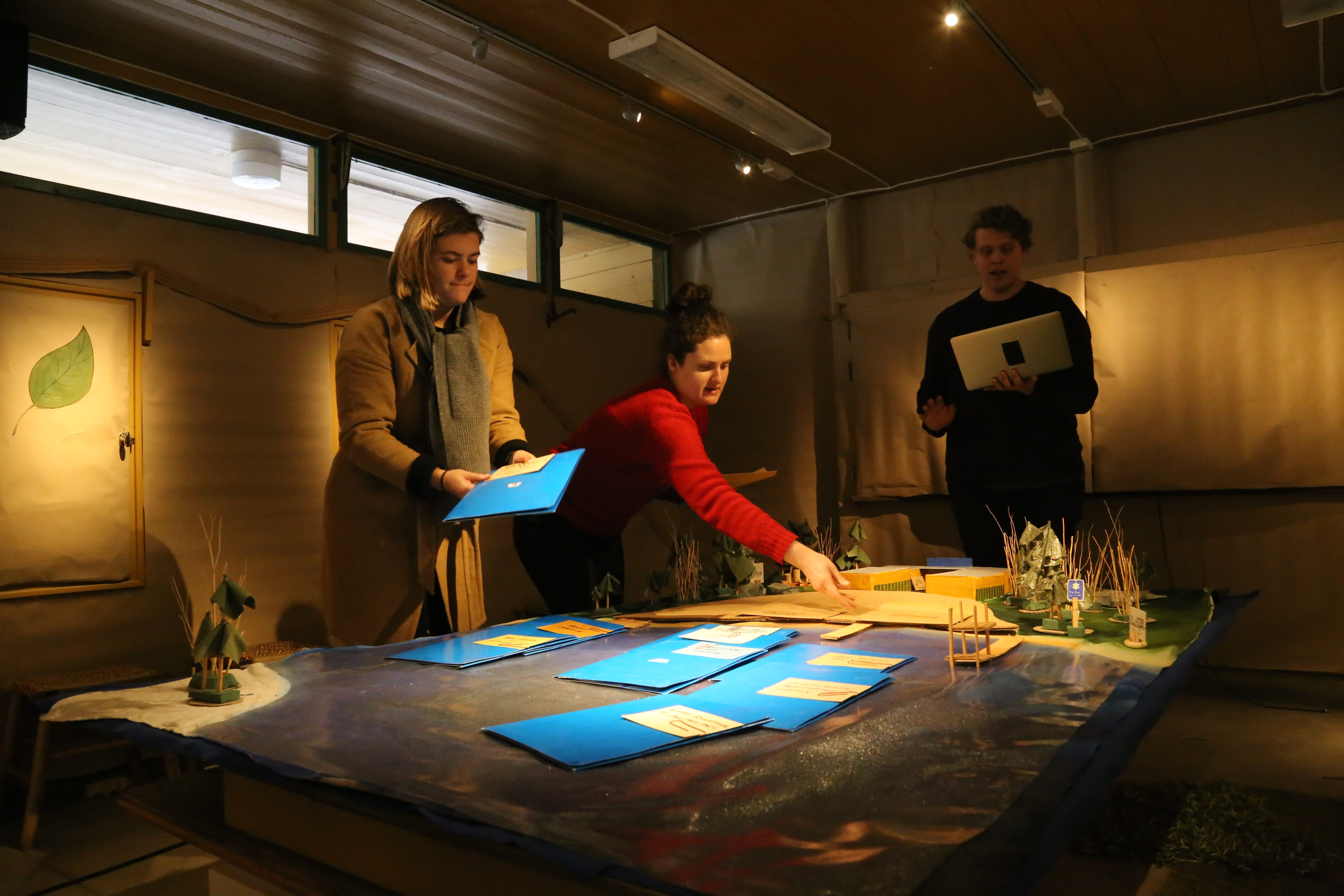
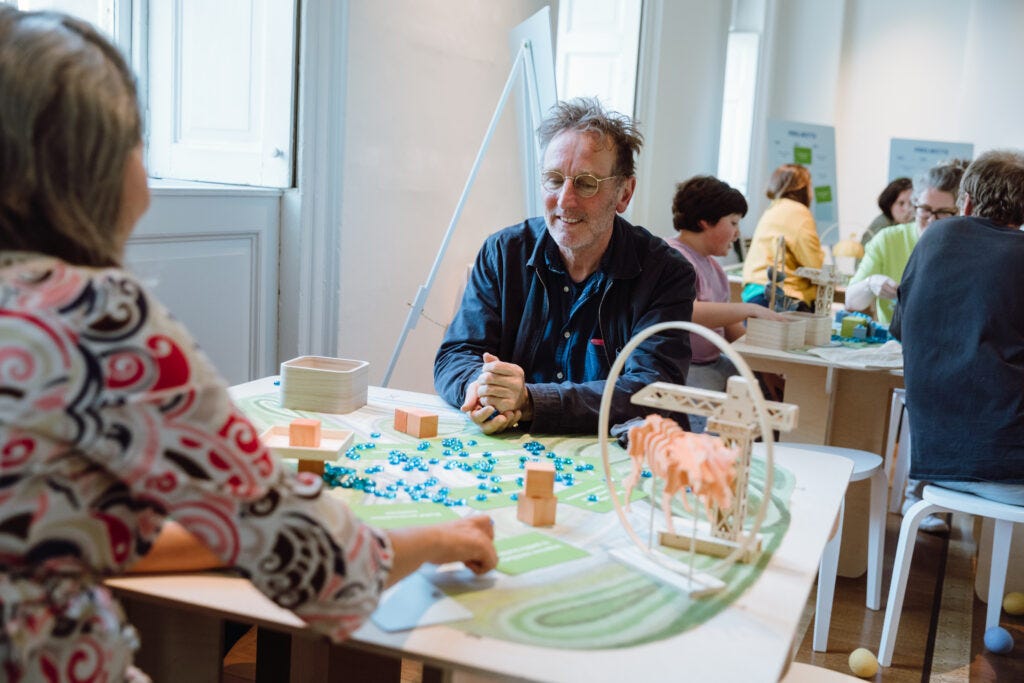
As many of you will know, much of my work involves mapping and modelling complex systems, then translating those models into interactive scenarios and playable simulations to help businesses, policy-makers and community members make sense of the systems they’re a part of.
In that work, I collaborate with research institutions, businesses and thinktanks like the World Bank, Chatham House London and the United Nations. Over the decades I’ve been working with these organisations, I’ve learned a lot about what makes a collaboration between big organisations and game designers successful.
Earlier this year, I synthesised a lot of that learning into a Field Guide. This is intended as a manual for people in organisations and institutions who are considering engaging with games and simulations, to avoid some common traps and to create impactful projects.
That Field Guide for Commissioning Systems Games is available to read here. If you have any thoughts or comments, or if you’d be interested in collaborating on a project like this, please reach out.
RECOMMENDATIONS
Books
I’m very excited to report that my lifetime collaborator Jordan Prosser’s second book Blue Giant has just come out.
Abby Horne is in her early thirties, suffering the unbearable burdens of adulthood and anonymity, when she wakes up after a drunken bender with an all-new, all-consuming purpose in life: to be the first person on Mars.
It’s the funniest thing I’ve read in a long time and I’m so excited for other people to get to experience it.
Apart from that, I’ve been buried up to my neck in Peter Brannen’s The Story of CO2 is the Story of Everything, which is rewiring my understanding of early Earth history in the best way. I read the chapter on Snowball Earth twice, I’m not even kidding.
Music
I wasn’t especially moved by the new Boards of Canada (I’m sure it’ll grow on me), but I’ve been losing my mind to a few older jams:
FKA Twigs - Girl Feels Good
I’m a big fan of Koreless’ Agor record for the jarring whiplash textures, so when I heard that he was doing the production for Twigs, I was expecting something along those lines, not this joyful Madonna-vibed midtempo sex jam.
Bill Orcutt - The Four Louies
The only Steve Reich / Louie Louis reworking you’ll ever need. As Reuben Ingall pointed out, the essay on the Bandcamp page is a work of genius in its own right. This is the pre-show music for my next solo show.
Midland - All Crews
’Well the beauty of the rave is that, although one is transported to a… a separate level, one doesn’t have to answer questions. All the questions are answered in the immediacy and joy of the celebration that is the rave culture.’ Sure, yes, exactly, why not?
---
As ever, you can get more background on my practice in my New Rules for Modelling series, or you can check out my website. And if you have any questions or offers that might make my life more interesting, feel free to get in touch.
Peace!